Welcome to BKPOWER!







.png)
.png)

Voltage Stabilizer Solution for Data Center Industry
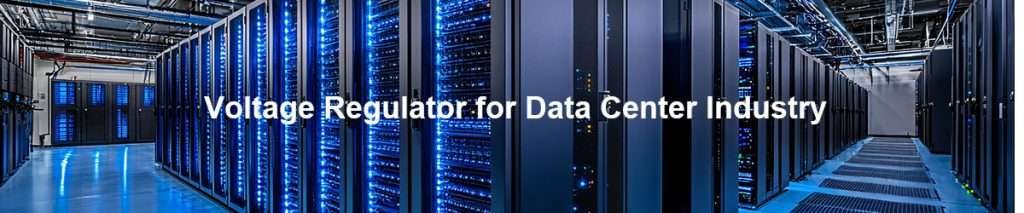
TIPS:This solution focuses on the application of BKPOWER AVR series contactless voltage stabilizers in the data center industry, addressing power needs in core machine rooms, modular clusters, and edge nodes with ±1% accuracy regulation, N+X redundancy design, and harmonic governance solutions. Covering the full process from equipment selection to energy-saving optimization and intelligent monitoring, the solution helps data centers achieve 99.999% availability and PUE value optimization.
Ⅰ. Power Stability Challenges in Data Centers
1. Critical Equipment Reliability Demands
- Server clusters and storage arrays require voltage fluctuations ≤±1% to avoid data transmission errors and equipment downtime.
- Network core switches are sensitive to voltage sags, with momentary fluctuations potentially causing routing table loss and service interruptions.
- Precision air conditioners and cooling equipment behind UPS systems may shut down due to unstable voltage, leading to a surge in PUE values.
2. High-Density Load Management Dilemmas
- When the power density per cabinet exceeds 20kW, traditional stabilizers’ delayed response can trigger chain power outages.
- Distributed power access in modular data centers results in grid total harmonic distortion (THD) exceeding 8%.
- In aged grid environments, voltage deviations exceeding ±10% occur frequently, threatening the lifespan of IT equipment.
3. Green Data Center Compliance Pressures
- Under carbon neutrality goals, stabilizer efficiency must be ≥95% to reduce PUE values.
- High-density deployment scenarios require small-sized, efficient heat dissipation equipment to avoid additional air conditioning loads.
Ⅱ. AVR Series Solution Architecture
1. Three-Level Power Protection System
- Level 1: Precision Voltage Regulation
Contactless magnetic balance technology achieves ±1% voltage accuracy with a 10ms ultra-fast response, 50 times better than traditional relay types. - Level 2: Harmonic Governance
Built-in LC filters control THD below 2.5%, complying with IEEE 519-2014 standards. - Level 3: Intelligent Redundancy
N+X parallel architecture supports clustering of 8 units, automatically reconfiguring the system during single-point failures to ensure 99.999% availability.
2. Data Center Scenario-specific Deployment
| Application Area | Recommended Model | Capacity Configuration | Core Advantages |
|---|---|---|---|
| Core Machine Room | AVR-200KVA | 200KVA/160KW | Dual-power input + hot-swappable battery |
| Modular Container | AVR-100KVA | 100KVA/80KW | IP54 protection + wide-temperature design |
| Edge Computing Node | AVR-50KVA | 50KVA/40KW | Compact size at 700×800×1500mm |
Ⅲ. Core Selection Parameters and Configurations
1. Power Calculation Model
- Formula: Total IT equipment power × 1.5 (safety factor) + 30% expansion margin
- Case Study: For a 300kW data center:
300kW × 1.5 = 450KVA → Recommend AVR-500KVA model, reserving 30% space for computing capacity expansion.
2. Technical Parameter Comparison
| Parameter Item | Traditional Relay Stabilizer | AVR Contactless Stabilizer | TIA-942 Standard Requirements |
|---|---|---|---|
| Voltage Regulation Accuracy | ±5%~±8% | ±1% | Critical loads ≤±1.5% |
| Efficiency | 85%~88% | 95% (ECO mode) | ≥92% |
| Mean Time Between Failures (MTBF) | 50,000h | 100,000h | ≥80,000h |
| Harmonic Suppression | None | THD≤2.5% | ≤5% |
Ⅳ. Data Center Special Protection Strategies
1. Server Cluster Voltage Stabilization Solution
- Dual-mains Input: Automatic switching time <4ms, paired with a BYPASS static switch to avoid surge impacts.
- Dynamic Voltage Compensation: Provides 125% overload protection for 10 seconds against inrush current during blade server startup.
- Test Data: After deploying AVR-300KVA in a cloud computing center, server blue screen incidents dropped from 8 times monthly to 0.
2. Cooling System Energy-saving Solution
- Intelligent Fan Linkage: Automatically adjusts stabilizer cooling power based on PUE values, reducing air conditioning load by 15%.
- ECO Mode Switching: Switches to bypass when mains power is stable, increasing efficiency to 96% and saving over 100,000 kWh annually.
- Case Study: PUE value in a T3+ data center decreased from 1.58 to 1.52 after application.
3. Edge Computing Protection Solution
- Wide-temperature Design: Stable operation in -10℃~+50℃ environments, suitable for outdoor container data centers.
- Surge Protection Configuration: Built-in 30kA lightning protection module to address harsh grid conditions at edge sites.
- Operation Data: Equipment failure rate at an edge node decreased by 90% using AVR-50KVA.
Ⅴ. Data Center Environmental Adaptation Design
1. High-Density Deployment Optimization
- Modular Heat Dissipation: Independent air duct design supports rack heat density ≥40kW/rack.
- Volume Reduction: 30% smaller than traditional stabilizers, saving valuable machine room space.
2. Electromagnetic Compatibility Enhancement
- Shielding Design: All-metal housing + copper mesh shielding, with EMI radiation ≤30dBμV/m (30MHz~1GHz).
- Ground Isolation: Independent grounding system with resistance ≤1Ω to prevent signal crosstalk.
Ⅵ. Intelligent Monitoring and Management
1. DCIM System Integration
- Real-time Parameter Monitoring: 32 indicators including voltage, current, harmonics, and temperature 接入 data center management platforms.
- Capacity Forecasting: AI algorithms predict expansion needs 6 months in advance based on computing power growth trends.
2. Remote Operation and Maintenance Functions
- SNMPv3 Protocol: Enables remote restart and parameter configuration via the data center O&M platform.
- Fault Tracing: Historical waveform recording function quickly locates the root cause of voltage anomalies.
Ⅶ. Installation and Compliance Certification
1. Machine Room Implementation Standards
- Cable Specifications: Input cables use 25mm² copper cores to meet loads above 100KVA.
- Grounding Requirements: Independent grounding electrodes are ≥5m away from IT equipment grounding networks to prevent potential difference interference.
2. Testing and Acceptance Process
- Load Testing: 120% rated load continuous operation for 24 hours to verify heat dissipation and voltage stability.
- Switching Test: Simulates mains power failure to verify 0ms switching to battery mode with no service perception.
Ⅷ. Full-cycle Operation and Maintenance Services
1. Preventive Maintenance Plan
- Quarterly Maintenance: Battery internal resistance detection + cooling fan dust removal to ensure heat dissipation efficiency.
- Annual Overhaul: Magnetic balance module calibration + insulation resistance test to ensure performance compliance.
2. Intelligent O&M System
- Health Score: Generates equipment health reports based on vibration, temperature, and other data to warn of faults in advance.
- Spare Parts Management: Critical modules like power units offer 7×24-hour spare parts delivery services.
References
- International Electrotechnical Commission (IEC)Official website: www.iec.ch
- Underwriters Laboratories (UL)Official website: www.ul.com
- European Committee for Standardization (CEN)Official website: www.cen.eu
- Standardization Administration of China (SAC)Official website: www.sac.gov.cn
- Zhongguancun Energy Storage Industry Technology Alliance (CNESA)Official website: www.cnESA.org
- International Organization for Standardization (ISO)Official website: www.iso.org