Welcome to BKPOWER!












Residential Inverter丨Stacked Optical Storage Machine丨BK-SCPSS-5~25KWh
PRODUCT PARAMETERS
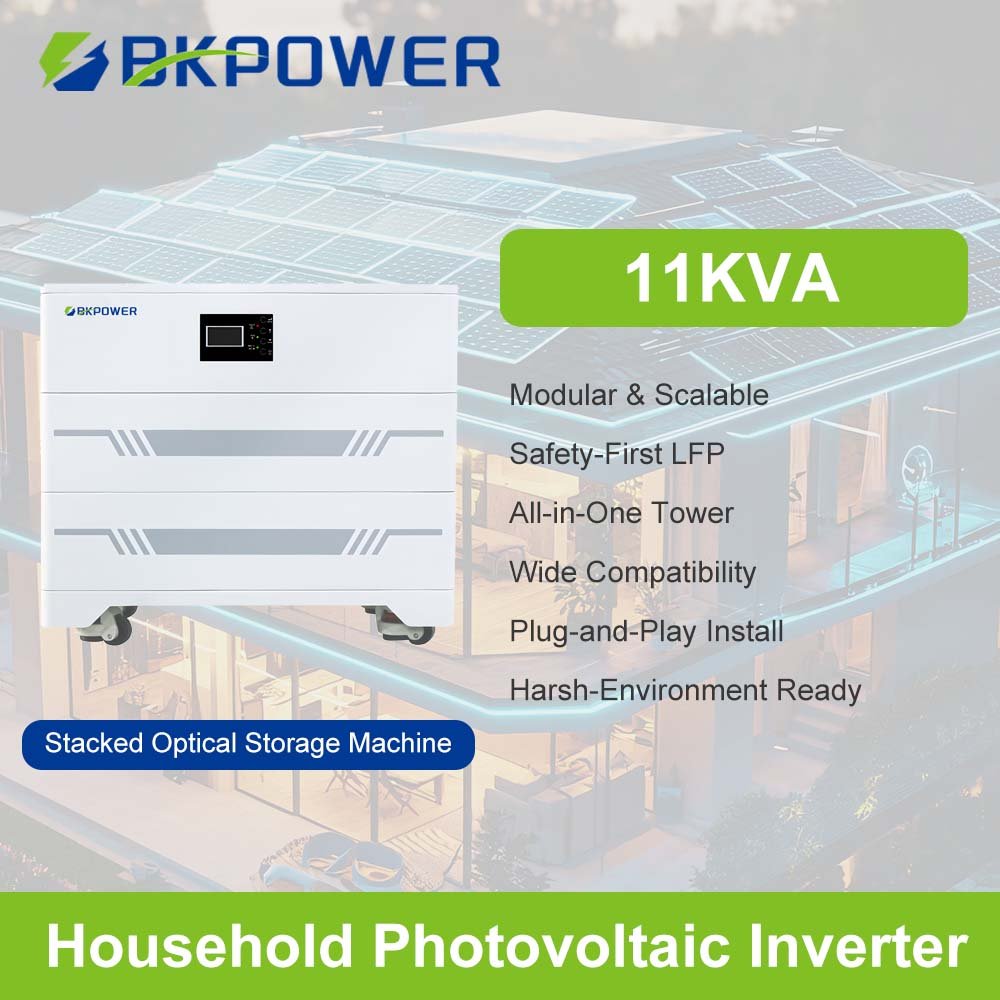
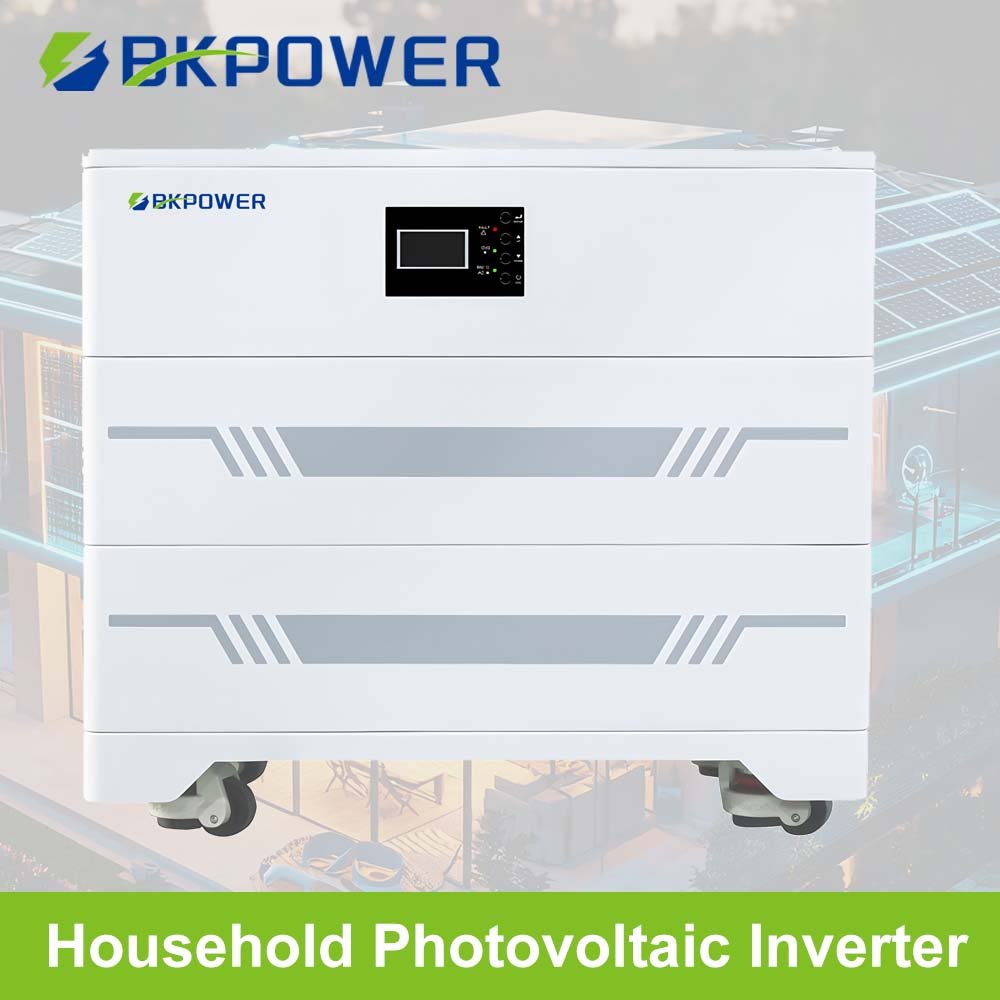
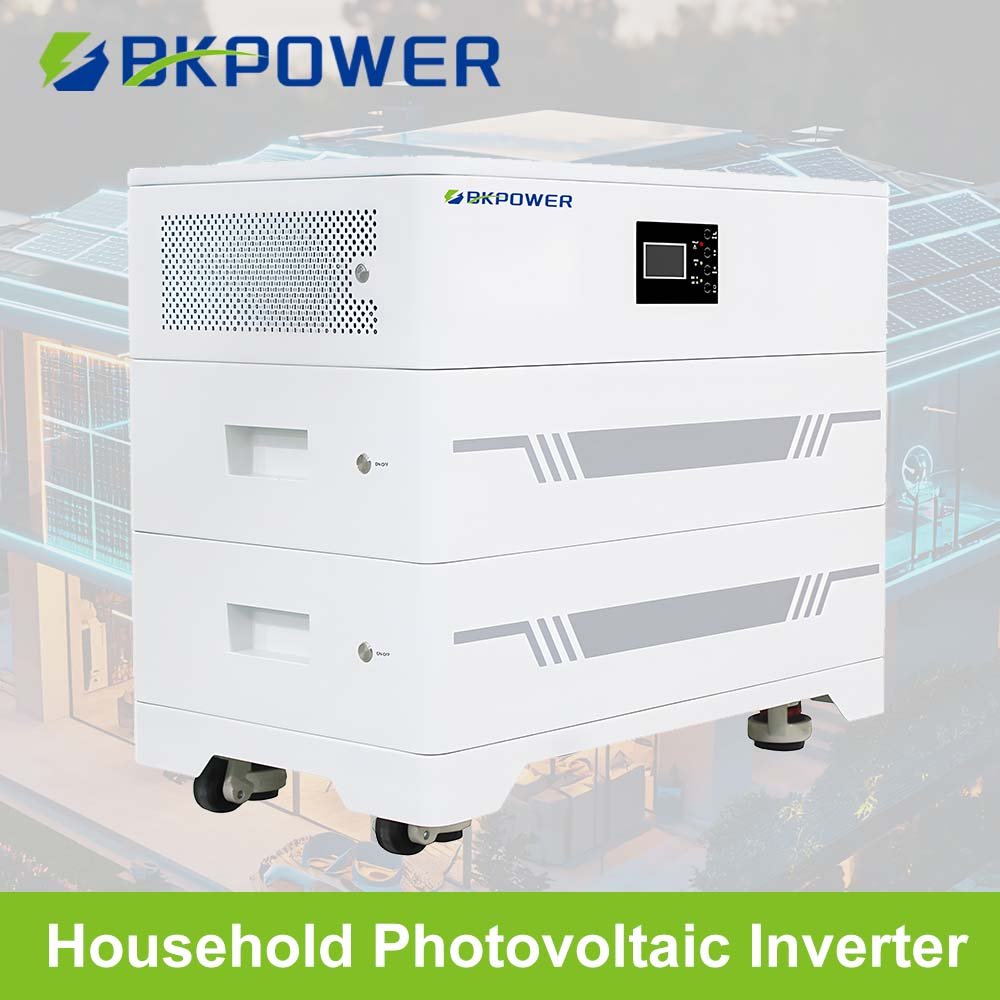
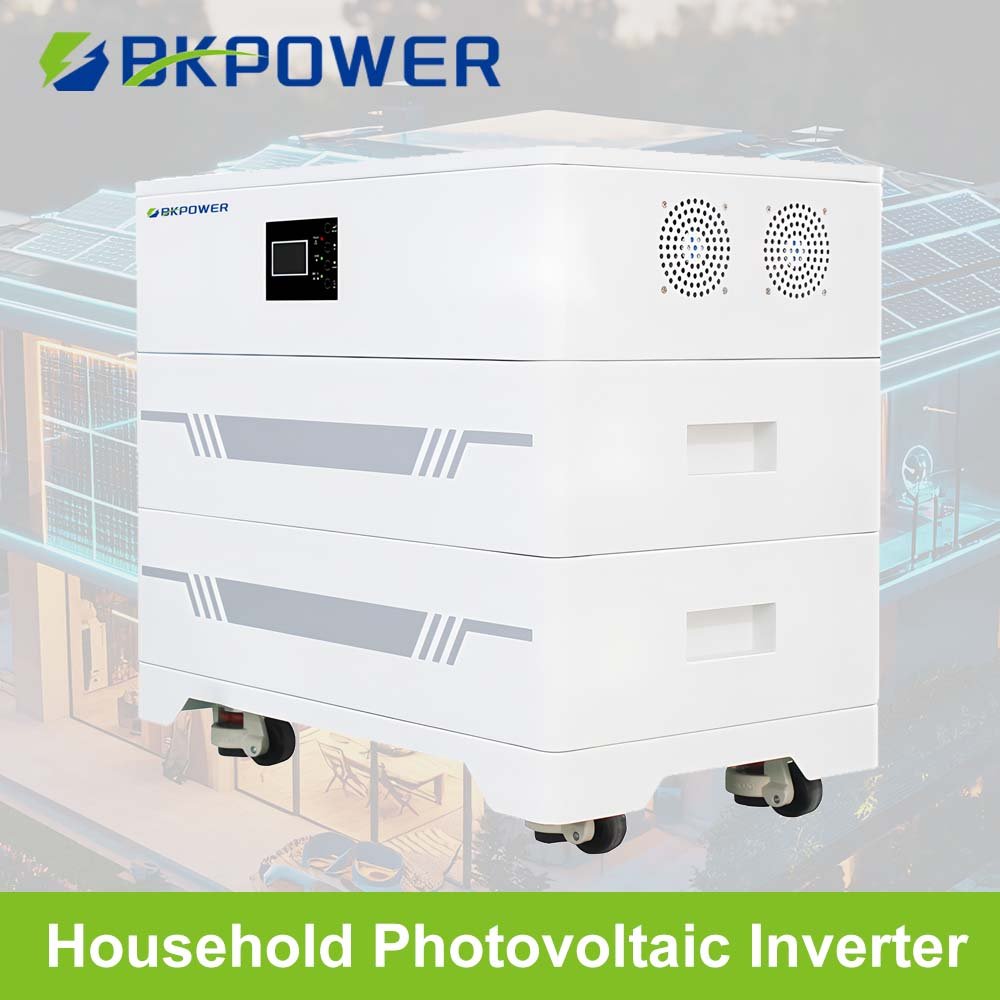
The BK-INV series is a floor-standing, stackable integrated photovoltaic-storage unit designed specifically for urban apartments, rural micro-grids, small commercial spaces (cafés, workshops), and emergency backup scenarios, integrating a modular LFP battery system, built-in MPPT solar charger, and UPS-grade inverter.
- Modular & Scalable Capacity Design
- Safety-First LFP Battery System
- All-in-One Integrated Functionality
- Wide Compatibility & Flexible Application
- Smart Monitoring & Easy Operation
- Robust & Space-Saving Structure
Description
FAQs
Request A Quote
Description
Product Overview
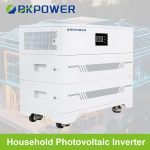
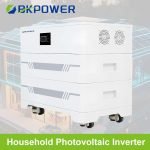
The BK-SCPSS-5~25 KWh is a floor-standing, stackable solar-plus-storage system that merges a 5 KW hybrid inverter with 5–25 KWh of LFP (LiFePO₄) batteries in a single tower. Each 5 KWh module slides and locks into place—no cables, no tools—allowing users to start small and expand to 25 KWh as budgets grow. Delivering 1.5–11 KW of continuous power, it covers everything from apartments to small factories in one plug-and-play cabinet.
Application
- Urban Apartments & Villas
Start with 5 kWh for essential circuits, add modules as PV grows.
- Rural Micro-Grids
15–25 kWh towers power schools, clinics or small farms without diesel.
- Small Commercial
10 kWh + 6 kW hybrid inverter for a café or workshop—daytime PV sell-back, nighttime battery supply.
- Emergency Backup
UPS mode keeps servers, medical devices or telecom towers online during blackouts.
- Retrofit & Rental Housing
Wheel-in towers, plug into existing PV strings—no rewiring, low CAPEX.
Product Features
- Modular & Scalable
• 5 KWh blocks; 1–5 modules = 5–25 KWh, 5–25 KW peak. Pay-as-you-grow investment.
- Safety-First LFP
• >2 500 cycles, 40–58.4 V low-voltage design, UL/IEC62619 & UN38.3 certified, built-in fire suppression vents.
- All-in-One Tower
• Integrated MPPT (120–430 V, 4.5 kW PV), 93 % round-trip efficiency, 150 A surge (<3 s), pure-sine UPS-grade switching.
- Wide Compatibility
• Single-phase 90–280 V AC; auto 50/60 Hz; pairs with any 1.5–11 KW hybrid inverter or micro-inverter.
- Smart HMI & Cloud
• 4-inch touch screen + Wi-Fi/RS485/CAN; Android/iOS app for SOC, PV yield, grid feed-in and remote OTA updates.
- Plug-and-Play Install
• Tower wheels + rear handles; single-person setup in <10 min. Front-service fans slide out without tools.
- Harsh-Environment Ready
• –20 °C to +60 °C discharge, 0 °C to +45 °C charge, IP21, natural convection cooling up to 4 000 m altitude (derate above 1 500 m).
Specifications
| Model | BK-SCPSS-5~25 KWh | |||||
| Product Type | Integrated photovoltaic storage unit | |||||
| Power Capacity | 5 KWh | 10 KWh | 15 KWh | 20 KWh | 25 KWh | |
| Phase | Three-phase | |||||
| Battery | Voltage | 51.2V | ||||
| Battery Rated Capacity | 100AH | |||||
| Continuous Discharge Current | 100A | |||||
| Maximum Discharge Current | 150A<3S | |||||
| Standard Charging Current | 50A | |||||
| Fast Charging Current | 100A | |||||
| Number Of Batteries | 1 | 2 | 3 | 4 | 5 | |
| Battery Type | Lithium iron phosphate (LiFePO4) | |||||
| Cycle Count | >2500 times | |||||
| Battery Voltage Range | 40~58.4V | |||||
| Power Mdule | Mains Input Voltage Range | Home appliance mode: 90–280 Vac; UPS: 170–280 Vac | ||||
| Mains Input Rated Frequency | 50Hz/60Hz | |||||
| Maximum Recommended Module Power | 4500W | |||||
| Module Open-circuit Voltage | 450V | |||||
| MPPT Operating Voltage Range | 120~430V | |||||
| Efficiency | 93% | |||||
| Standard Parameters | Installation Method | landing | ||||
| Maximum Working Altitude | 4000m (reduction required above 1500m) | |||||
| Operating Temperature | Charging temperature: 0~45℃ Discharging temperature: -20℃~60℃ | |||||
| Cooling Method | Air-cooled | |||||
| Storage Temperature | -15℃-60℃ | |||||
| Humidity | 5%-95% | |||||
| Dimensions (D×W×H) | Depends on the model selection | |||||
| Weight | 80kg | 135kg | 190kg | 245kg | 300 kg | |
FAQs
What is UPS?
UPS stands for Uninterruptible Power Supply and is a device that provides a continuous supply of power to protect critical loads from power failures or fluctuations.
What is the main role of UPS?
The main role of a UPS is to provide a backup power source to ensure that critical equipment can continue to operate when utility power is interrupted or unstable, avoiding data loss or equipment damage.
What are the types of UPS?
UPS is mainly divided into three types: offline, online and online interactive.
How to choose the power capacity of UPS?
When choosing the power capacity of the UPS, you need to consider the total power demand of the load, it is usually recommended to choose a slightly larger than the total load power of the UPS to ensure sufficient standby time.
How is the standby time of a UPS determined?
The standby time of a UPS depends on the battery capacity and load power. Standby time usually ranges from 10 minutes to several hours, and the specific needs can be determined according to the actual application scenario.