Welcome to BKPOWER!












UPS Backup Time Calculator: Load Management & Runtime Optimization Guide
TIPS:Calculating UPS backup time is just the first step. The real challenge lies in load tiering management and dynamic power budgeting. Beyond basic formulas, this guide explores how to optimize battery runtime for online UPS through load priority matrices, providing multi-scenario configuration strategies from home offices to data center UPS. Whether designing backup power systems for tower UPS or optimizing UPS working hours, this practical UPS runtime guide helps maximize your UPS power investment returns.

I. UPS Backup Time: From Theoretical Calculation to Practical Optimization
When power outages occur, every second counts. UPS uninterruptible power supply backup time determines whether you can safely save data, maintain critical operations, or wait for generator startup. But most users focus only on basic formulas, overlooking how load management dramatically impacts UPS working hours.
This guide goes beyond simple UPS backup time calculations. We explore dynamic power budgeting, load tiering strategies, and multi-scenario configuration solutions to help you extend battery runtime by 30-50% while reducing total cost of ownership.
II. Core Calculation Principles for UPS Backup Time
1. Basic Formula and Engineering Corrections
The fundamental formula for UPS backup time is:
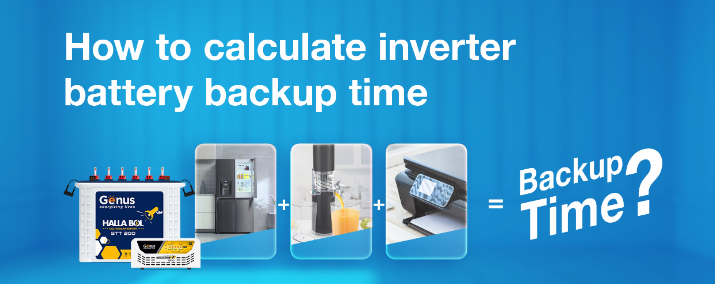
Backup Time (hours) = (Battery Capacity Ah × Battery Voltage V × Inverter Efficiency) ÷ Load Power W
Example Calculation:
- 12V × 100Ah × 0.9 ÷ 500W = 2.16 hours
But engineering practice requires correction factors:
Peukert Effect Correction: High-rate discharge reduces actual battery capacity below rated values. Higher discharge current means less available capacity. For 15-minute short backup, add 20-30% capacity margin.
Temperature Correction:
- 25℃: Baseline capacity 100%
- 0℃: Capacity drops to 70-75%
- 40℃: Short-term capacity boost but halved lifespan
Aging Correction: VRLA batteries lose 3-5% capacity annually. Design should calculate at 80% capacity for 5-year period.
2. Battery Configuration Quantity Calculation
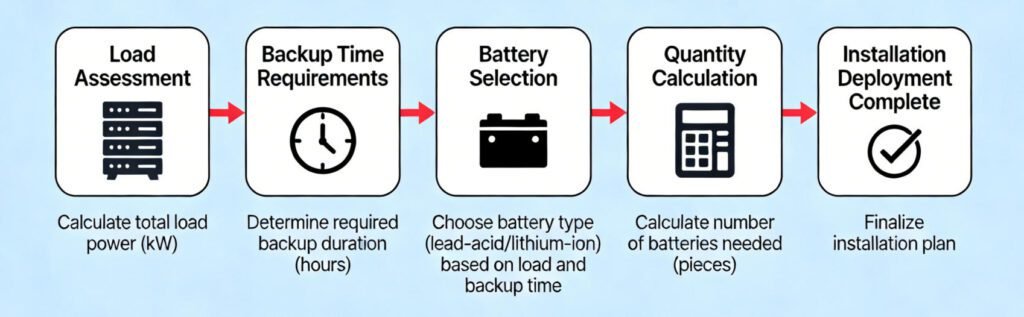
For long-duration (>1 hour) scenarios, external battery bank configuration formula:
Required Battery Sets = (Load Power W × Backup Time H) ÷ (Single Set Capacity Ah × Voltage V × Efficiency × Depth of Discharge)
Depth of Discharge (DoD) Recommendations:
- Lead-acid batteries: Maximum 80% to protect battery life
- Lithium batteries: Up to 90-95% for improved usable capacity
III. Load Tiering Management: Strategic Methods to Extend Backup Time
1. Critical Load Identification and Classification
Not all devices need equal protection. Through load tiering, you can allocate limited UPS power to truly critical systems:
Tier 1 Loads (Life/Business Critical):
- Server hosts and storage arrays
- Network core switches and firewalls
- Medical life support equipment
- Industrial control systems
- UPS backup time target: Support until generator starts or orderly shutdown completes
Tier 2 Loads (Operationally Important):
- Office computers and monitors
- Phone systems and access layer networks
- Security monitoring systems
- Environmental control systems
- UPS backup time target: 15-30 minutes to ensure data preservation
Tier 3 Loads (General Support):
- Printers, scanners
- Non-critical lighting
- Water dispensers, microwaves
- Personal charging devices
- UPS backup time target: Immediate power-off or short-term support acceptable
2. Intelligent Load Shedding Strategies
Modern online UPS supports programmable outlets, enabling intelligent load shedding:
Sequential Power-Off Plan:
- 0 minutes outage: Tier 3 loads automatically disconnect
- 10 minutes outage: Tier 2 loads alarm, prepare for disconnection
- 20 minutes outage: Only Tier 1 loads retained, maximizing battery runtime
Power Budget Reallocation: Assuming total load 1000W, with Tier 1 at 400W, Tier 2 at 300W, Tier 3 at 300W:
- Full load operation: 1000W ÷ battery capacity = 1 hour backup
- After Tier 3 disconnection: 700W load = 1.4 hours backup (40% extension)
- After Tier 2&3 disconnection: 400W load = 2.5 hours backup (150% extension)
3. Dynamic Power Monitoring and Alerting
Deploy UPS power supply monitoring systems to track in real-time:
Key Metrics:
- Current load percentage and remaining working hours
- Battery discharge rate and remaining capacity
- Temperature status and cooling efficiency
- Estimated remaining runtime (based on real-time load)
Tiered Alert Mechanism:
- 50% capacity: Email notification to administrators
- 30% capacity: SMS/APP push alerts
- 15% capacity: Initiate automatic shutdown scripts
- 5% capacity: Mandatory safe shutdown
IV. Multi-Scenario UPS Configuration Practical Solutions
1. Home Office Scenario: Precise Demand Matching
Typical Load Analysis:
- Desktop computer: 150-300W
- Monitor: 30-50W
- Router/ONT: 10-20W
- NAS storage: 30-60W
- Total: 220-430W
Configuration Strategy: Select tower UPS 600-1000VA with internal batteries supporting 15-30 minutes backup time. Prioritize protection for computers and routers; monitors can connect to non-protected outlets.
Extension Techniques:
- Use laptops instead of desktops (60% power reduction)
- Turn off monitors while keeping hosts running (save 20-30% power)
- Enable UPS ECO mode (bypass when utility normal, extend battery life)
2. SMB Server Room: Balancing Cost and Reliability
Typical Loads:
- Rack servers: 5-10 units × 300W = 1500-3000W
- Network equipment: Switches, firewalls, APs = 500-800W
- Storage equipment: SAN/NAS = 800-1500W
- Total: 2800-5300W
Configuration Solution: Adopt online UPS 6-10kVA with external battery banks achieving 1-2 hours UPS working hours. Configure dual-machine parallel for N+1 redundancy.
Load Management Essentials:
- Automatically shut down development/test servers during non-business hours
- Virtualization consolidation improves single-machine efficiency
- Precision air conditioning linked with UPS, prioritize cooling when temperature exceeds limits
3. Data Center Scenario: Tiered Protection and Generator Handoff
Design Goal:UPS backup time only needs to cover generator startup time (typically 10-15 minutes), not long-term independent operation.
Architecture Design:
- Tier A data center: 2N redundant UPS systems, 15 minutes backup per path
- Tier B data center: N+1 redundancy, 15-30 minutes backup
- Lithium battery UPS power supply: 3-5 minute high power density solution
Generator Handoff:
- 0 seconds outage: UPS system seamless takeover
- 10 seconds outage: Generator start signal sent
- 60 seconds outage: Generator stable, UPS power supply transfers to bypass
- Power restored: UPS power supply resumes charging, preparing for next protection
4. Industrial Manufacturing Scenario: Anti-Shock and Long Duration
Special Challenges:
- Motor starting current surge (5-7x rated current)
- Voltage sags and outages coexisting
- Need minute-level to hour-level backup time
Solution:
- Transformer-based UPS or online UPS provide isolation and anti-shock capability
- Supercapacitor modules handle second-level voltage sags
- Large capacity battery banks (200Ah+) support hour-level production cycle completion
V. Battery Technology Selection and Backup Time Optimization
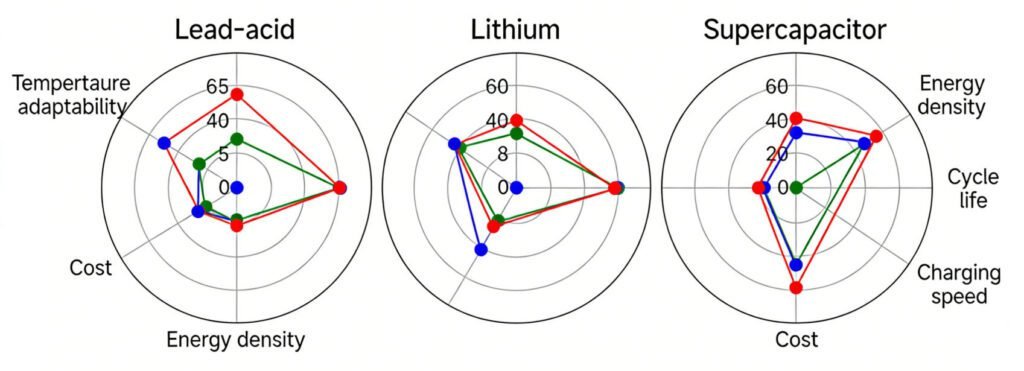
1. Lead-Acid Batteries: Economical Long-Duration Solution
Applicable Scenarios: Backup time requirements >30 minutes, budget-sensitive, controllable ambient temperature (20-25℃).
Configuration Points:
- Select deep-cycle VRLA batteries (8-10 year design life)
- Configure temperature-compensated charging (-3mV/cell per ℃)
- Conduct capacity testing every 3 years, promptly replace battery sets with >20% degradation
Life Extension Techniques:
- Avoid deep discharge (<50% capacity)
- Regular equalization charging (every 3 months or after deep discharge)
- Maintain ventilated environment, temperature <30℃
2. Lithium Batteries: High Density and Fast Charging Advantages
Applicable Scenarios: Space-constrained, need fast charging, or high-rate discharge (short-term high-power support).
Performance Advantages:
- Same backup time, 50-60% volume reduction
- 4x faster charging speed (80% in 1 hour)
- Support 90% depth of discharge, usable capacity improved 15-20%
- 15-20 year lifespan, same cycle as UPS systems
Cost Considerations: Initial investment is 2-3x lead-acid, but 10-year TCO reduced by 20-30%. Suitable for new projects or urban data centers with high space costs.
3. Hybrid Energy Storage: Supercapacitor + Battery
Innovative Architecture:
- Supercapacitors: Handle <1 second voltage sags, 1 million cycle life
- Lithium batteries: Provide minute-level backup time
- Lead-acid batteries: Provide hour-level long duration
Value Proposition: Reduce battery cycle count, extend overall system life, particularly suitable for industrial environments with poor grid quality.
VI. Monitoring, Testing and Continuous Optimization
1. Real-Time Monitoring System Deployment
Modern UPS power supply should integrate comprehensive monitoring:
Electrical Parameters:
- Input/output voltage, current, frequency
- Load percentage and power factor
- Battery voltage, current, temperature, internal resistance
- Estimated backup time real-time calculation
Environmental Parameters:
- Cabinet temperature and humidity
- Smoke and water leak detection
- Door access and physical security
Communication Interfaces:
- SNMP (network management)
- Modbus (building automation)
- Dry contacts (alarm linkage)
- Cloud platform (remote operations)
2. Regular Discharge Testing Regime
Testing Frequency:
- Monthly: Self-test (10-30% load, 5-10 minutes)
- Quarterly: Deep discharge test (50% load, to low voltage alarm)
- Annually: Full load discharge test (verify actual UPS working hours)
Testing Purpose:
- Verify actual battery capacity vs. rated difference
- Discover early-failing cells
- Calibrate backup time estimation algorithms
- Train operations team emergency response
3. Capacity Planning and Expansion Strategy
Business Growth Reserve: Initial configuration designed at 120% of current load, reserving 20% margin for growth.
Modular Expansion: Select UPS systems supporting hot-swappable batteries, enabling battery bank addition without interrupting loads, extending backup time.
Lifecycle Management: Establish battery replacement plans, avoiding massive capital expenditure from batch replacement. Adopt rolling replacement strategy, replacing 20% of oldest batteries annually.
VII. Common Misconceptions and Professional Recommendations
1. Capacity Configuration Misconceptions
Misconception 1: Calculating by VA Rating UPS rated at 10kVA, but power factor 0.8, actual usable power only 8kW. Should calculate backup time by actual load power (W) not apparent power (VA).
Misconception 2: Ignoring Power Factor Server load power factor 0.9-0.95, but motor loads may be as low as 0.6. Incorrect estimation leads to insufficient battery runtime.
Misconception 3: Full Load Design Designing at 100% load causes investment waste. Actual operating loads typically 40-60% of rated value; configure based on actual measurements.
2. Battery Maintenance Misconceptions
Misconception 1: Maintenance-Free = No Maintenance VRLA batteries don’t need watering, but still require regular internal resistance, temperature, and terminal voltage checks.
Misconception 2: Long-Term Float Charging is Beneficial Long-term small-current float charging easily causes battery sulfation. Should equalize or shallow discharge cycle every 3 months.
Misconception 3: Mixing Old and New Batteries Old and new batteries have large internal resistance differences; parallel use causes new battery overcharge and old battery undercharge, degrading overall performance.
3. Load Management Misconceptions
Misconception 1: Connecting All Devices to UPS Printers, scanners and other inductive loads have large starting currents, impacting UPS power supply; should connect directly to utility power.
Misconception 2: Ignoring Non-IT Loads Precision air conditioning, fire systems if connected to UPS systems, dramatically shorten backup time. Should have independent power or dedicated high-capacity UPS.
Misconception 3: Static Configuration Not reassessing loads after business growth, causing declining UPS working hours year by year. Should conduct load audits annually.
Conclusion: Systematic Thinking Maximizes UPS Value
UPS backup time is not simple mathematical calculation, but systems engineering involving load management, battery technology, monitoring maintenance, and lifecycle management. Through load tiering strategies, you can allocate limited battery runtime to most critical devices, achieving business continuity goals.
Remember three core principles:
- Precise Calculation: Based on actual loads, introducing engineering correction factors
- Dynamic Management: Adjust power allocation according to business priorities
- Continuous Optimization: Regular testing, monitoring and maintenance to ensure designed performance
Choose BKPOWER UPS power supply solutions for full-process support from backup time calculation to load management strategies, providing reliable power protection for your critical business.
References
- International Electrotechnical Commission (IEC)Official website: www.iec.ch
- Underwriters Laboratories (UL)Official website: www.ul.com
- European Committee for Standardization (CEN)Official website: www.cen.eu
- Standardization Administration of China (SAC)Official website: www.sac.gov.cn
- Zhongguancun Energy Storage Industry Technology Alliance (CNESA)Official website: www.cnESA.org
- International Organization for Standardization (ISO)Official website: www.iso.org